This is a question I didn’t ask myself before… Sponge bacteria, which are largely uncultivated, are surely an intriguing research topic, but what do they have in common with food? It turns out that there’s a quite sizable food microbiome research field, which I had the pleasure to glimpse into.
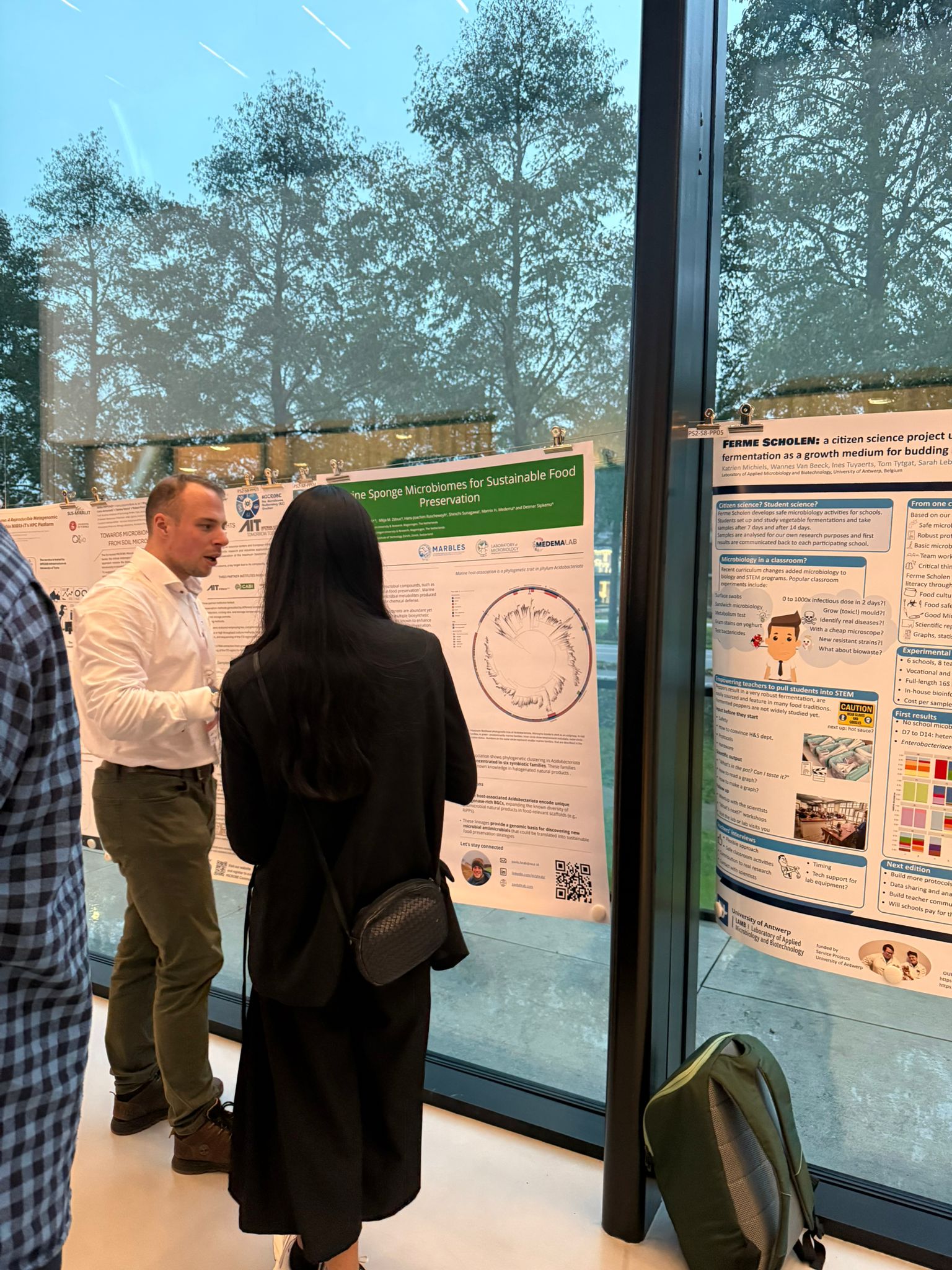
The vocabulary between the disciplines is different, and the subjects may be slightly different, but the challenges and basic underlying mechanisms remain the same. So what can sponge bacteria contribute to the food microbiome? I would argue that their understudied natural product biosynthesis repertoire is an example of such translatable research, especially given the need for new food preservatives in the field.
Nisin may be an example of such a molecule. It’s a widely known natural product, synthesized by bacteria, from the class of ribosomally synthesized and post-translationally modified peptides. We show that sponge bacteria (especially Acidobacteriota) have a lot more of those molecules, judged by genomic data. Such small peptide clusters are of particular interest for further heterologous expression.